
Coloring curly hair is not the same as coloring straight hair. Curls are naturally drier, more fragile, and prone to breakage, which means one wrong step can lead to frizz, loss of definition, or serious damage. If you’ve ever walked out of a salon with brassy tones, uneven color, or limp curls, you’re not alone. Many curly-haired clients struggle to find colorists who truly understand their texture.
This guide is written for real people with real curl concerns — dryness, shrinkage, uneven lift, and fear of damage. If you want vibrant color without sacrificing your curl pattern, here’s exactly what you need to know.
Why Curly Hair Needs a Specialized Coloring Approach
Curly strands have a raised cuticle and bends along the hair shaft. This structure makes it harder for natural oils to travel from scalp to ends, which is why curls are typically drier. Chemical processes like bleaching or permanent dye can worsen that dryness if not done carefully.
Common real-world problems curly clients face:
- Color looks patchy because curls don’t lay flat
- Ends become brittle after lightening
- Curl pattern loosens or disappears
- Frizz increases dramatically
- Hair breaks during detangling
A professional colorist trained in curly hair understands that preserving the curl pattern is the priority, not just achieving a shade.
The Safest Coloring Techniques for Curly Hair
1. Customized Placement (Not One-Size-Fits-All)
Traditional foil techniques can create harsh lines on curls. Instead, many experts use:
- Hand-painting (balayage adapted for curls)
- Curl-by-curl application
- Strategic highlights that follow natural movement
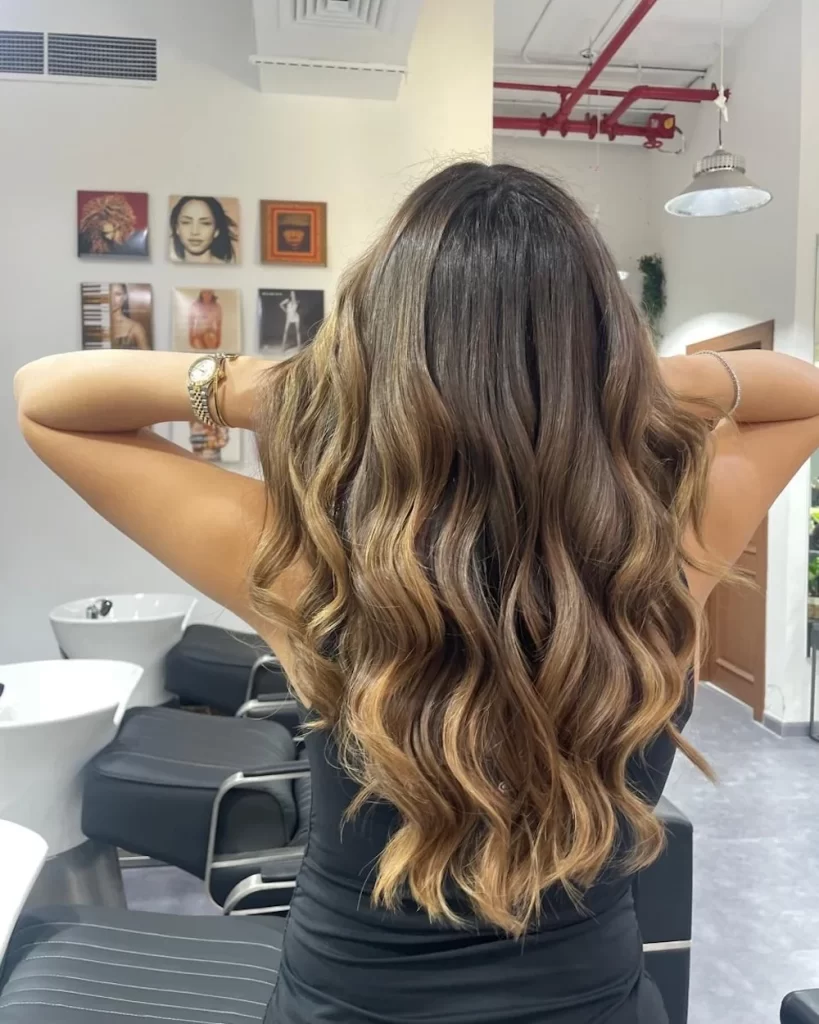
This ensures the color enhances dimension rather than flattening it.
2. Gentle Lightening Methods
Curly hair rarely tolerates aggressive bleach sessions. A safer approach includes:
- Lower-volume developers
- Bond-protecting treatments
- Gradual lightening over multiple sessions
Patience protects your hair’s integrity.
3. Deep Hydration Before and After
Coloring should never happen on severely dry curls. Preparing the hair with moisture treatments beforehand reduces damage and improves results.
After coloring, hydration is essential to restore elasticity and shine.
Choosing the Right Color for Your Curl Type
Not every trending shade suits curly hair. Consider:
Fine curls:
Opt for softer highlights rather than full bleaching to avoid breakage.
Thick/coarse curls:
Can handle richer tones and dimensional color but still require moisture support.
Tightly coiled hair:
Benefits from warm tones that enhance definition and shine.
A skilled colorist will analyze density, porosity, and curl pattern before recommending a shade.
How to Prevent Damage During the Coloring Process
Here’s what experienced curly specialists do differently:
- Detangle dry curls gently before coloring
- Avoid excessive brushing during processing
- Monitor lift carefully (curls process faster in some areas)
- Use protein-bond treatments
- Rinse with sulfate-free products
- These steps may seem small, but they make a huge difference in preserving your hair health.
Aftercare: Protecting Your Color and Curls
Coloring is only half the journey. Maintenance determines whether your curls stay healthy.
Essential aftercare routine:
- Use sulfate-free shampoos
- Deep condition weekly
- Minimize heat styling
- Sleep on silk or satin
- Refresh curls with leave-in products
Ignoring aftercare is one of the biggest reasons clients experience post-color damage.
Why Choosing the Right Salon Matters
Many salons treat curly hair like straight hair — applying color the same way, using the same products, and expecting the same results. That’s where things go wrong.
A curl-focused salon understands:
- Texture-specific techniques
- Moisture balance
- Curl pattern preservation
- Realistic color expectations
For those in the UAE, Frqncy Salon Dubai is known for tailoring color services specifically for textured and curly hair. Their approach focuses on healthy curls first, color second — exactly what curly clients need.
Signs Your Colorist Understands Curly Hair
Before booking, look for these green flags:
- They ask about your curl routine
- They evaluate porosity and elasticity
- They explain realistic outcomes
- They prioritize hair health over extreme lightening
- They provide a detailed aftercare plan
If a salon skips consultation, that’s a red flag.
Final Thoughts
Coloring curly hair without damage is absolutely possible — but only with the right technique, patience, and expertise. Your curls are unique, and your color experience should be too.
Healthy, defined, vibrant curls aren’t just about the dye used — they’re about understanding texture, respecting moisture needs, and customizing every step.
If you’ve been afraid to color your curls because of past damage, the solution isn’t avoiding color forever — it’s choosing specialists who truly understand curly hair.
FAQs
Can curly hair be bleached safely?
Yes, but it must be done gradually with bond-protecting treatments and deep conditioning. Rushing the process causes damage.
Will coloring loosen my curl pattern?
It can if done aggressively. Proper techniques and moisture support help maintain curl shape.
How often should curly hair be colored?
Most experts recommend spacing sessions 8–12 weeks apart to allow recovery time.
Is balayage good for curly hair?
Yes — when adapted for curls. Curl-specific balayage creates natural dimension without harsh lines.
What’s the biggest mistake people make after coloring curls?
Neglecting moisture. Hydration is essential to keep colored curls healthy and defined.
Share
Related posts